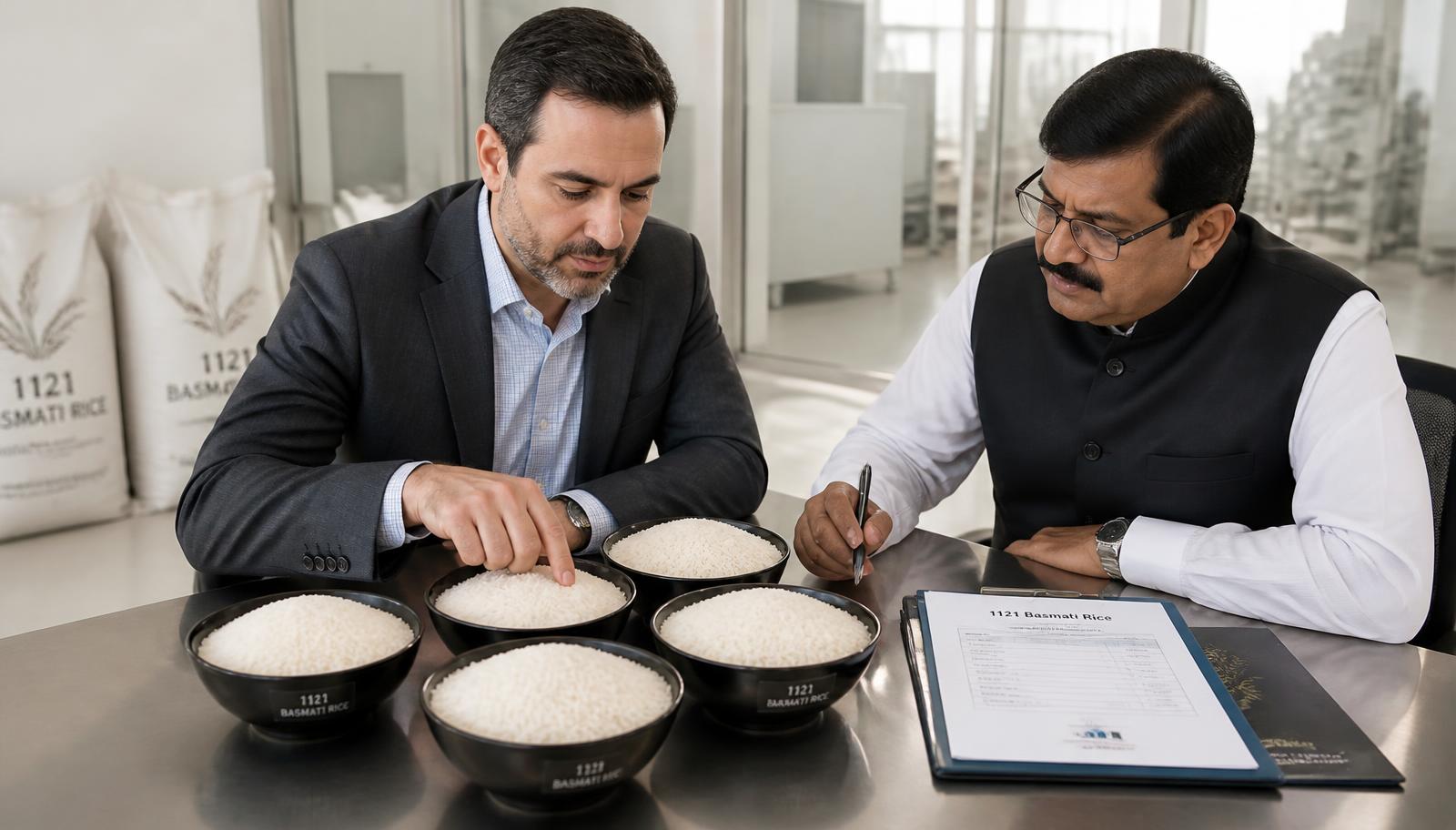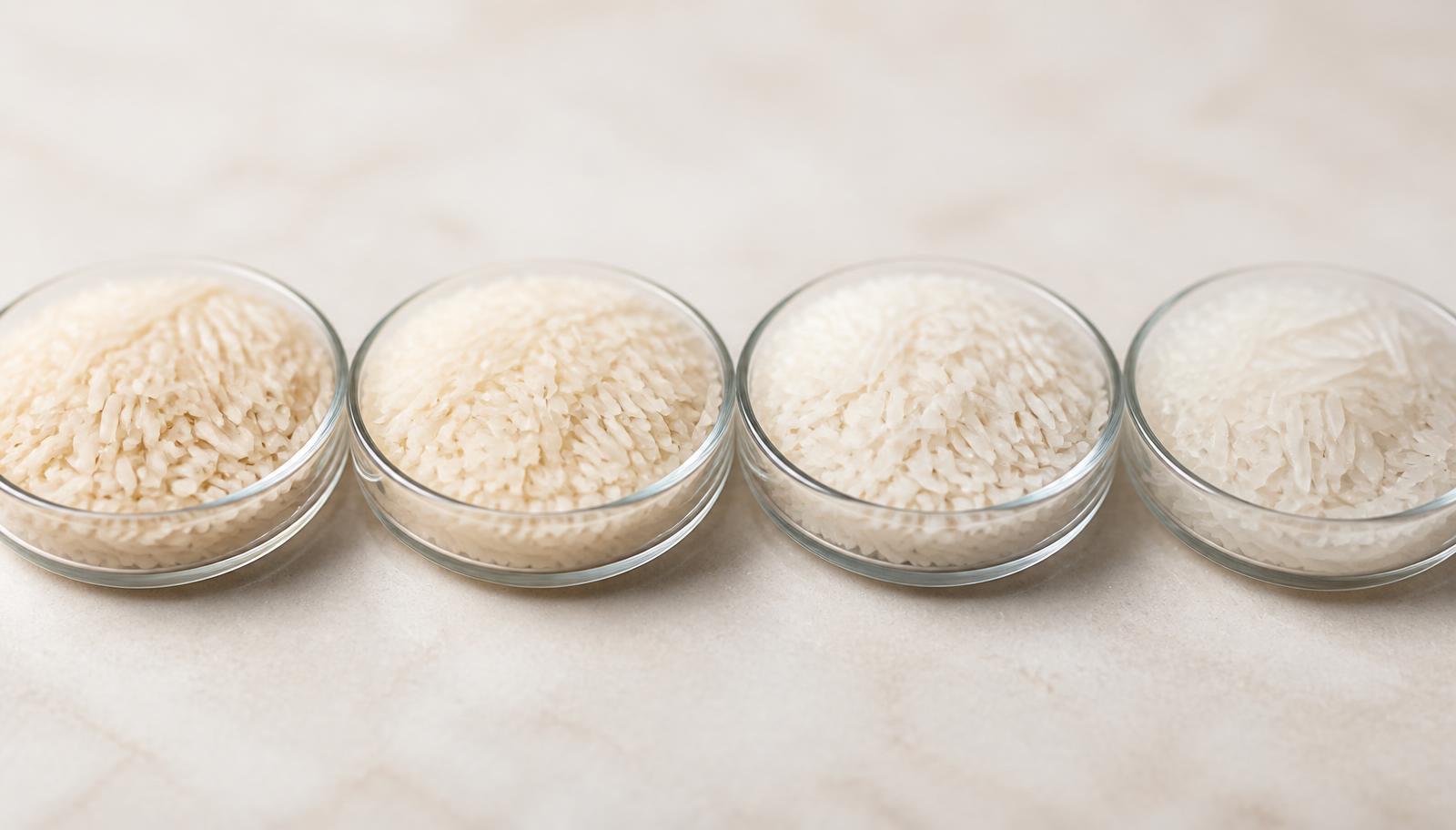
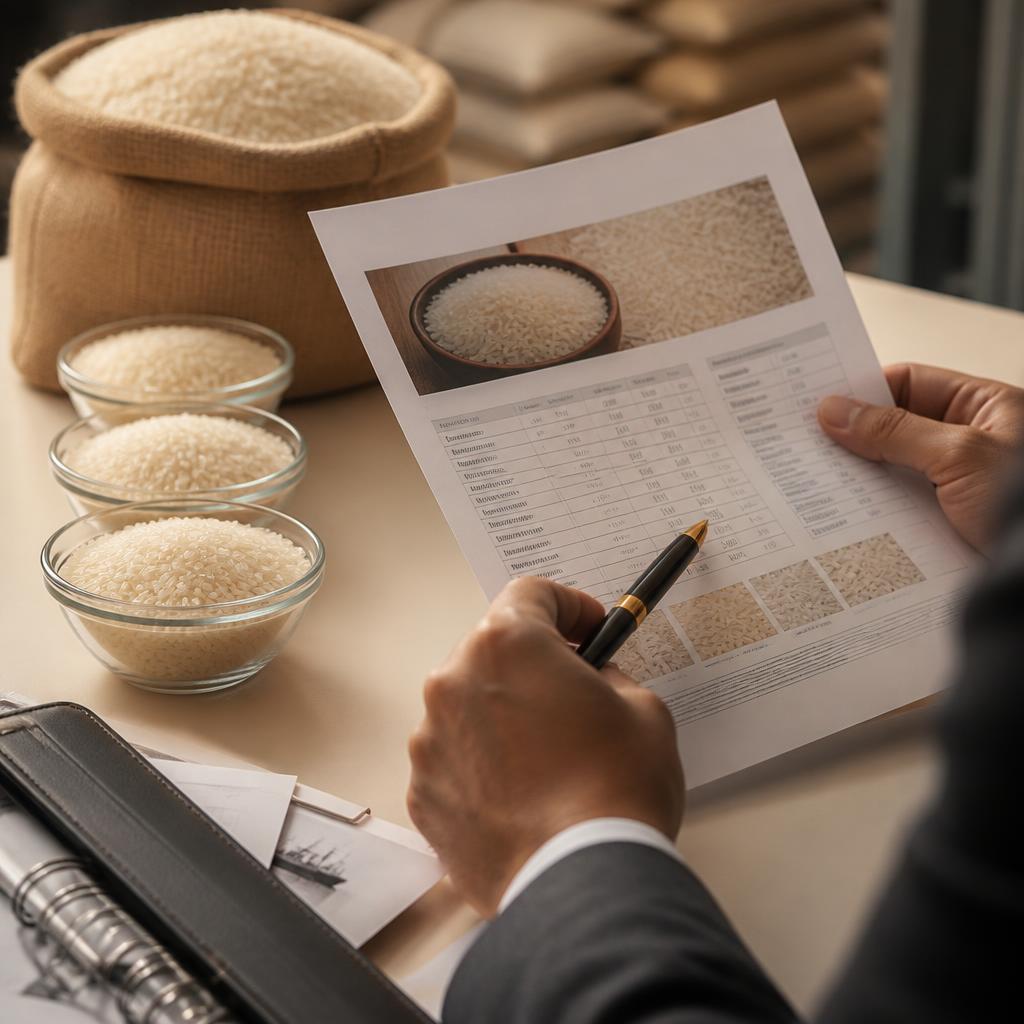
For an importer, wholesaler, distributor, retailer or food business, the right supplier should be able to provide the required rice variety, processing format, consistent product quality, suitable packing and dependable communication.
A buyer may be looking for 1121 Basmati Rice, 1509 Basmati Rice, Sona Masoori, IR64, Swarna, PR14, Long Grain White Rice or Broken Rice. Each product can have a different commercial purpose and processing requirement.
What Does an Indian Rice Exporter Do?
An Indian rice exporter supplies rice to buyers outside India and coordinates the commercial process surrounding the product.
Depending on the supplier and buyer requirement, this can involve:
- Rice variety selection
- Raw, steam or parboiled processing
- Basmati and non-basmati rice supply
- Product specifications
- Packing requirements
- Order coordination
- Dispatch and shipment coordination
A professional exporter should make it easy for the buyer to understand exactly what rice is being offered, in which form, and for what commercial requirement.
1. Start With the Rice Variety
The first question should not be "What is your lowest price?"
The better question is: which rice variety is suitable for my market and application?
Different markets may prefer different varieties.
Basmati Rice
Commonly requested varieties include:
- 1121 Basmati Rice
- 1509 Basmati Rice
Available processing forms can include Steam, Sella, Golden Sella and White.
Non-Basmati Rice
Popular varieties include:
- Sona Masoori Rice
- IR64 Rice
- Swarna Rice
- PR14 Rice
- Long Grain White Rice
- Broken Rice
Understanding the target market before selecting the product helps reduce the risk of choosing a rice variety that does not match buyer expectations.
2. Understand Raw, Steam and Parboiled Rice
Rice processing matters because the same broad rice category can be supplied in different forms.
Raw Rice
Raw rice is processed without parboiling and is used across many domestic and international food applications.
Steam Rice
Steam processing is used for several rice varieties and is commonly offered in export markets.
Parboiled Rice
Parboiling involves processing paddy through a controlled water-and-heat process before milling. Some varieties can be supplied in parboiled form.
The important point for buyers is to specify the required processing type before finalizing an order.
3. Look at the Supplier's Product Range
A supplier with a broader portfolio can make sourcing easier.
Instead of contacting separate suppliers for every product, a buyer may be able to source multiple varieties from one rice exporter.
For example, a supplier portfolio may cover Basmati, Non-Basmati, Broken Rice and Long Grain Rice.
This can simplify supplier communication and purchasing coordination.
4. Ask for Clear Product Specifications
Never purchase rice based only on the product name.
A serious buyer should discuss the actual commercial specification relevant to the order.
Depending on the product, this can include:
- Rice variety
- Processing type
- Grain characteristics
- Broken percentage
- Packing format
- Quantity
- Shipment requirements
- Destination-market requirements
Specifications should be agreed clearly before the commercial order is finalized.
5. Quality Consistency Matters More Than One Good Shipment
One good shipment does not automatically mean a supplier is reliable.
For importers and distributors, consistency is critical.
A reliable rice supplier should aim to maintain consistency across repeated orders in terms of the agreed product specification and processing requirements.
This is especially important when rice is sold under a private label, distributed through retail channels or supplied to repeat commercial customers.
6. Packaging Should Match the Market
Rice can be sold in different packaging formats depending on the market and buyer requirement.
Before placing an order, clarify:
- Bag size
- Packaging material
- Printed or plain bags
- Branding requirements
- Label information
- Export-market requirements
The packaging should be discussed as part of the order rather than treated as an afterthought.
7. Communication Is a Commercial Advantage
For international trade, supplier communication can be just as important as the product.
A buyer should be able to get clear answers about product, specification, quantity, packing, pricing and dispatch.
Slow or unclear communication can create unnecessary delays even when the underlying product is suitable.
8. Evaluate the Supplier for Your Long-Term Requirement
The best supplier is not necessarily the cheapest supplier.
A better evaluation includes product suitability, quality consistency, communication, processing options, supply coordination and commercial transparency.
This is particularly important when the objective is to build a repeat sourcing relationship.
Why Buyers Work With SHIKHAR AGRO INDUSTRIES
SHIKHAR AGRO INDUSTRIES is a rice mill and exporter with 5 years of business experience, offering both basmati and non-basmati rice varieties.
Its product range includes:
- Sona Masoori Rice — Raw / Steam
- IR64 Rice — Raw / Steam
- Swarna Rice — Raw / Steam
- PR14 Rice — Raw / Steam
- Long Grain White Rice
- Broken Rice — 100%
- 1121 Basmati Rice — Steam / Sella / Golden Sella / White
- 1509 Basmati Rice — Steam / Sella / Golden Sella / White
For buyers evaluating an Indian rice exporter, understanding the exact product requirement first is the most effective starting point.