For a professional buyer, quality is a combination of product identity, grain characteristics, uniformity, moisture, purity, processing, cooking performance and compliance with the agreed specification.
Whether you are purchasing for retail, food service, distribution or another business application, a structured inspection process reduces uncertainty and makes supplier comparisons easier.
Start With Grain Appearance
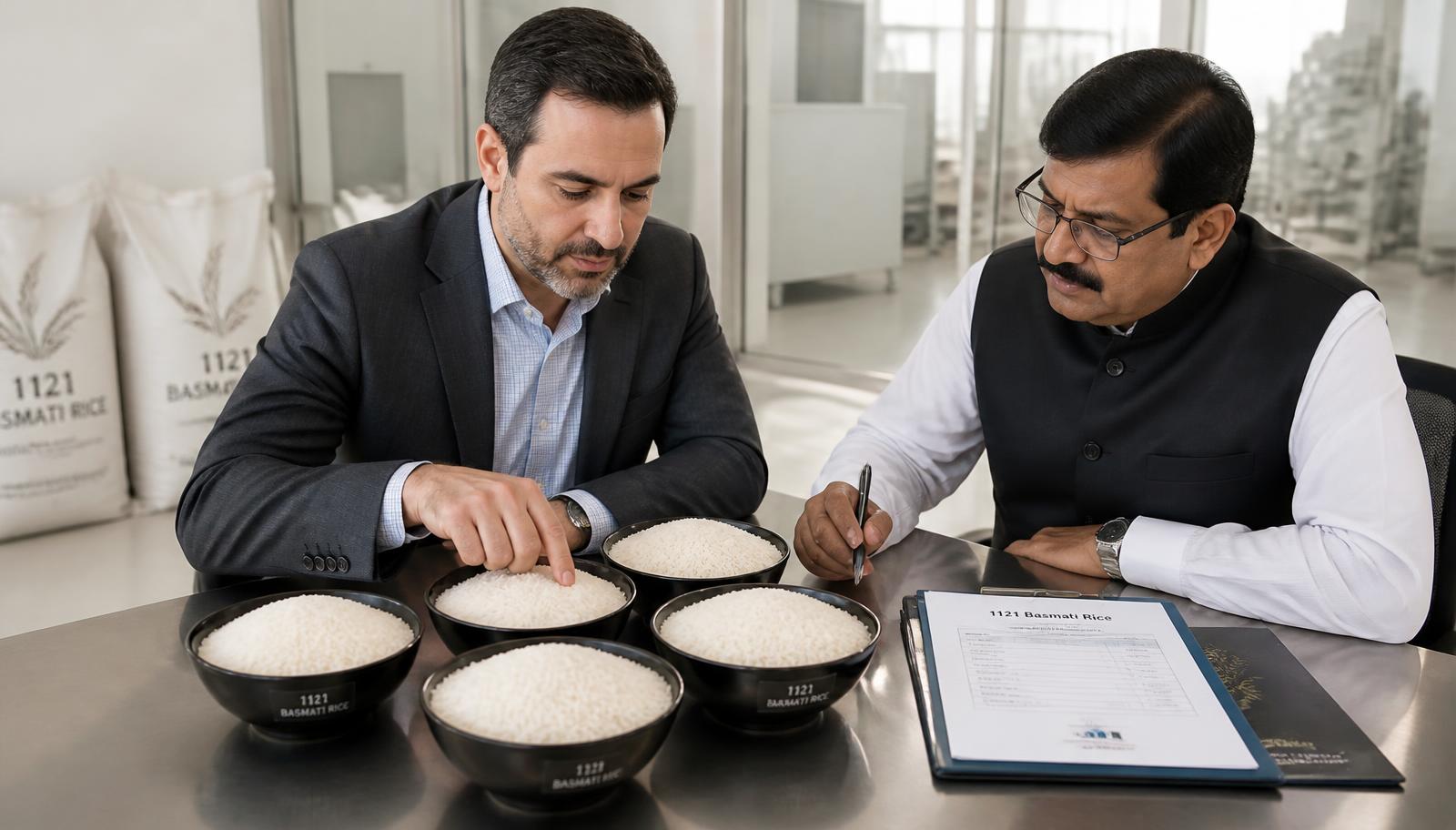
The first inspection is usually visual.
Look for:
- Consistent grain appearance
- Appropriate colour
- Uniformity
- Minimal unwanted material
- Limited broken kernels
- Clean packaging and product presentation
Visual inspection is useful, but it cannot verify every quality parameter.
A polished-looking sample may still fail a specification if moisture, broken percentage or other measurable requirements are outside the agreed range.
Check Grain Uniformity
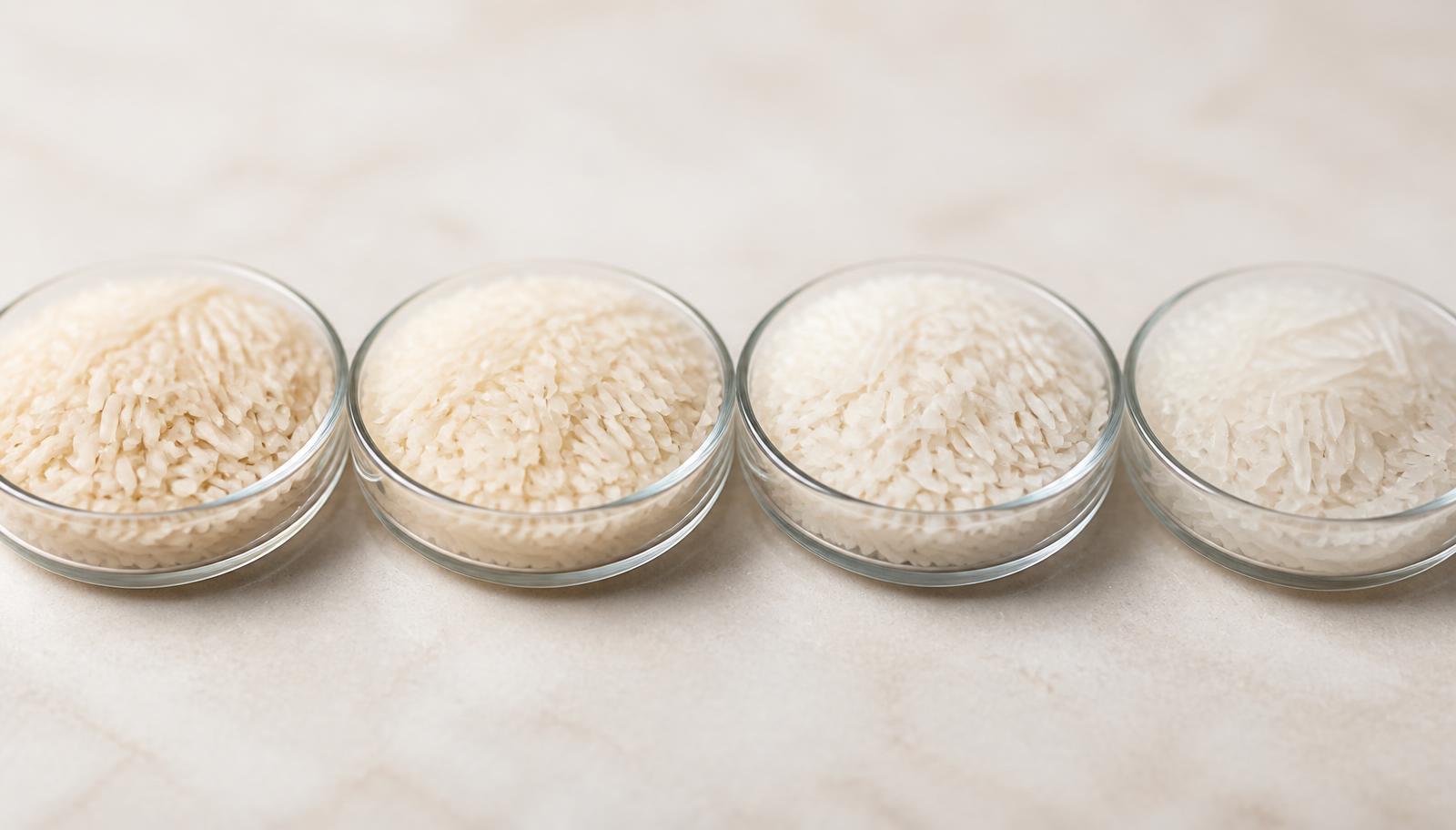
Uniformity matters because buyers and consumers generally expect the finished product to look consistent.
Excessive variation in grain appearance can affect presentation and may indicate that the product does not match the intended grade.
Where grain size is part of the specification, objective measurement should be used rather than visual judgement alone.
Moisture Matters
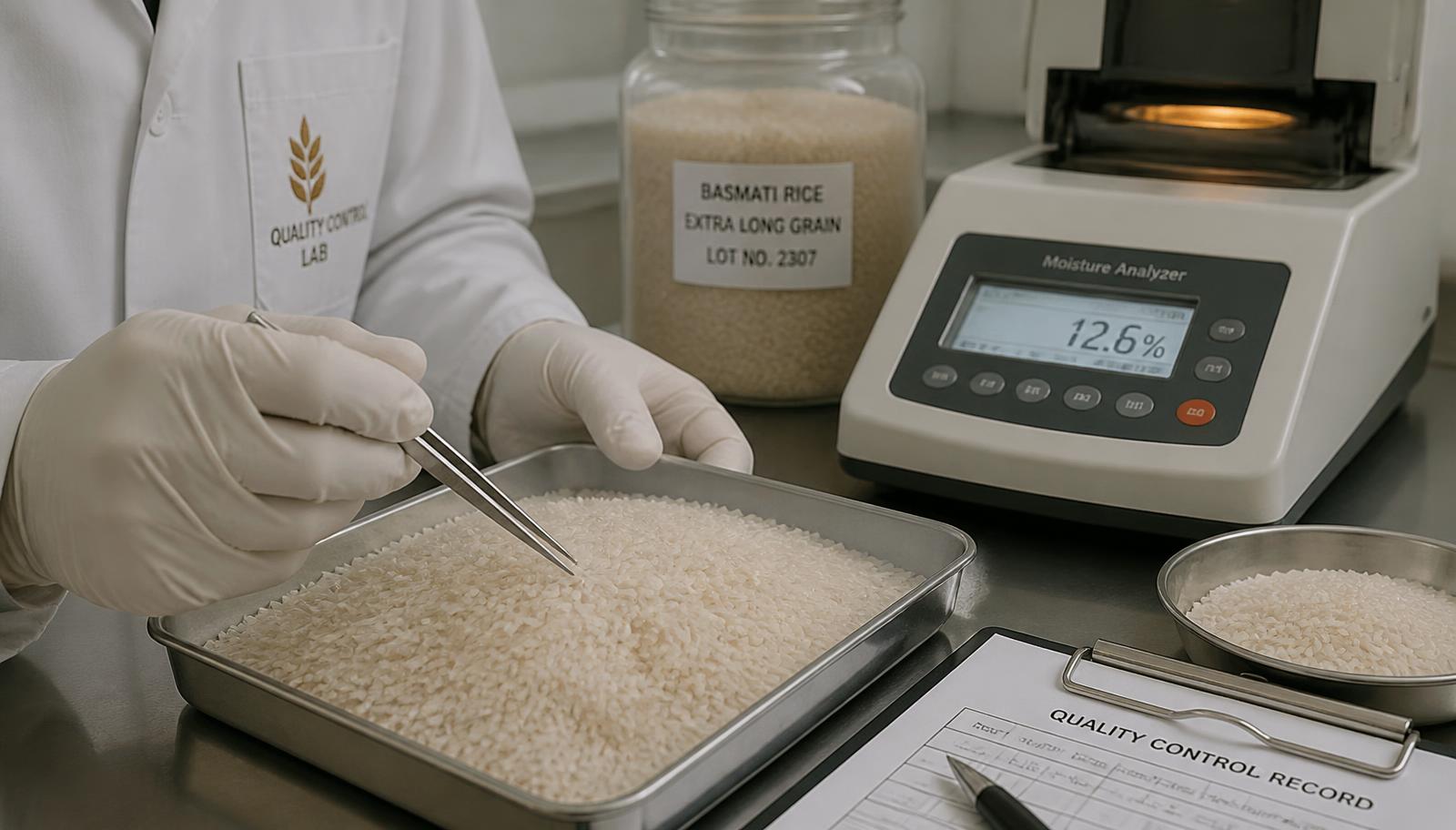
Moisture is an important quality parameter for milled rice because it affects storage stability and handling.
Codex provides a maximum moisture level for rice, while noting that lower limits may be required under certain conditions.
For commercial purchasing, the applicable moisture specification should therefore be stated clearly in the purchase agreement.
A buyer should not assume that one moisture figure is ideal for every shipment, storage situation or destination.
Assess Broken Kernels
Broken percentage is another important quality parameter.
Some broken grains are naturally produced during harvesting and milling, but the acceptable level depends on the agreed grade.
For this reason, buyers should define the permitted broken percentage before ordering.
When evaluating a sample, do not judge only by the number of broken grains visible on top. A representative sample and an appropriate measurement method provide a much more reliable assessment.
Check Purity and Extraneous Matter
Rice should be clean and appropriate to its specification.
Inspection should consider the presence of unwanted material and other defects.
International standards such as the Codex Standard for Rice provide reference limits for certain quality categories, but commercial contracts can contain additional requirements.
The important principle is to compare the shipment against the specification that actually applies to the purchase.
Evaluate Aroma
Natural Basmati aroma is an important sensory characteristic.
A buyer can evaluate aroma both before and after cooking.
However, aroma should not be treated as the sole test of authenticity or quality. Sensory evaluation works best alongside variety information, specifications and appropriate testing.
Test Cooking Performance
A cooking test can reveal characteristics that are difficult to judge from a raw sample.
Use a consistent method when comparing suppliers.
Observe:
- Grain elongation
- Separation
- Texture
- Aroma
- Appearance
- Uniformity after cooking
Using the same cooking conditions makes supplier comparisons much more meaningful.
Review Laboratory Testing
For commercial purchases, laboratory analysis may be appropriate for relevant quality and safety parameters.
Depending on the specification, testing can include:
- Moisture
- Broken percentage
- Grain characteristics
- Purity
- Relevant chemical or safety parameters
The exact tests should be selected according to the product, contract and applicable requirements.
A Certificate of Analysis can be useful when it is traceable to the actual lot being supplied.
Inspect Packaging
Packaging should protect the product during storage and transportation.
Check for:
- Correct net weight
- Intact bags
- Appropriate material
- Clear product identification
- Required labelling
- No visible moisture damage
- No evidence of infestation or contamination
- Correct lot or shipment information where applicable
Packaging inspection is especially useful immediately before loading and again when the shipment is received.
Use a Buyer's Quality Checklist
| Quality area | What to check |
|---|---|
| Product identity | Correct variety and processing |
| Appearance | Appropriate colour and visual uniformity |
| Grain | Size and shape according to specification |
| Broken kernels | Within agreed tolerance |
| Moisture | Within applicable specification |
| Purity | Meets agreed requirements |
| Aroma | Appropriate Basmati characteristics |
| Cooking | Consistent texture and appearance |
| Testing | Relevant quality/safety tests available |
| Packaging | Correct, clean and intact |
Do Not Judge Quality by Price Alone
A higher price does not automatically mean higher quality, and a lower price does not automatically mean poor quality.
The meaningful comparison is between equivalent specifications.
When comparing offers, ask what is actually included in the quoted product.
Is the rice the same variety?
Is the processing the same?
Are the quality tolerances the same?
Is the packaging equivalent?
Are the testing and inspection arrangements comparable?
Only then can price be evaluated properly.