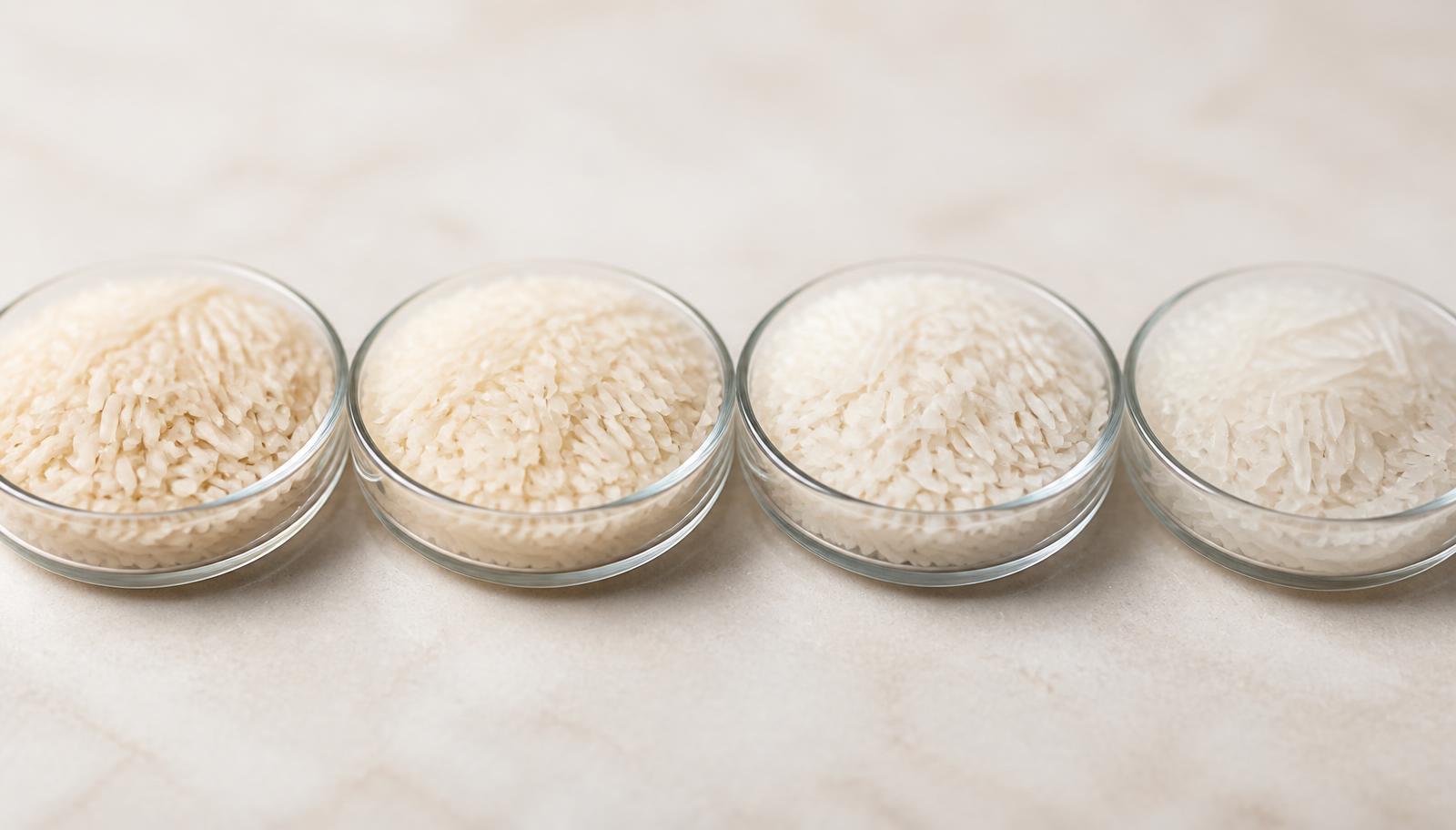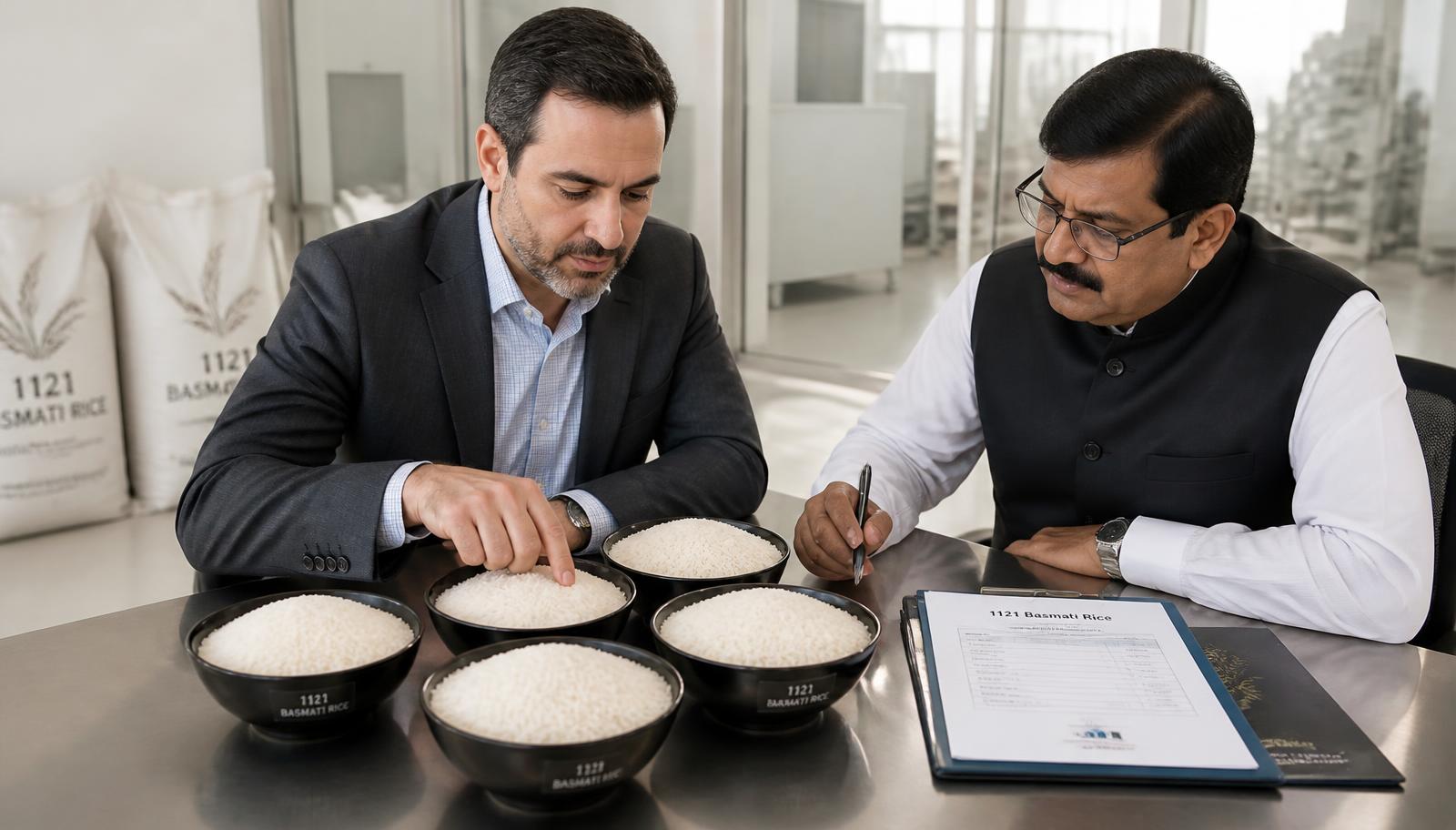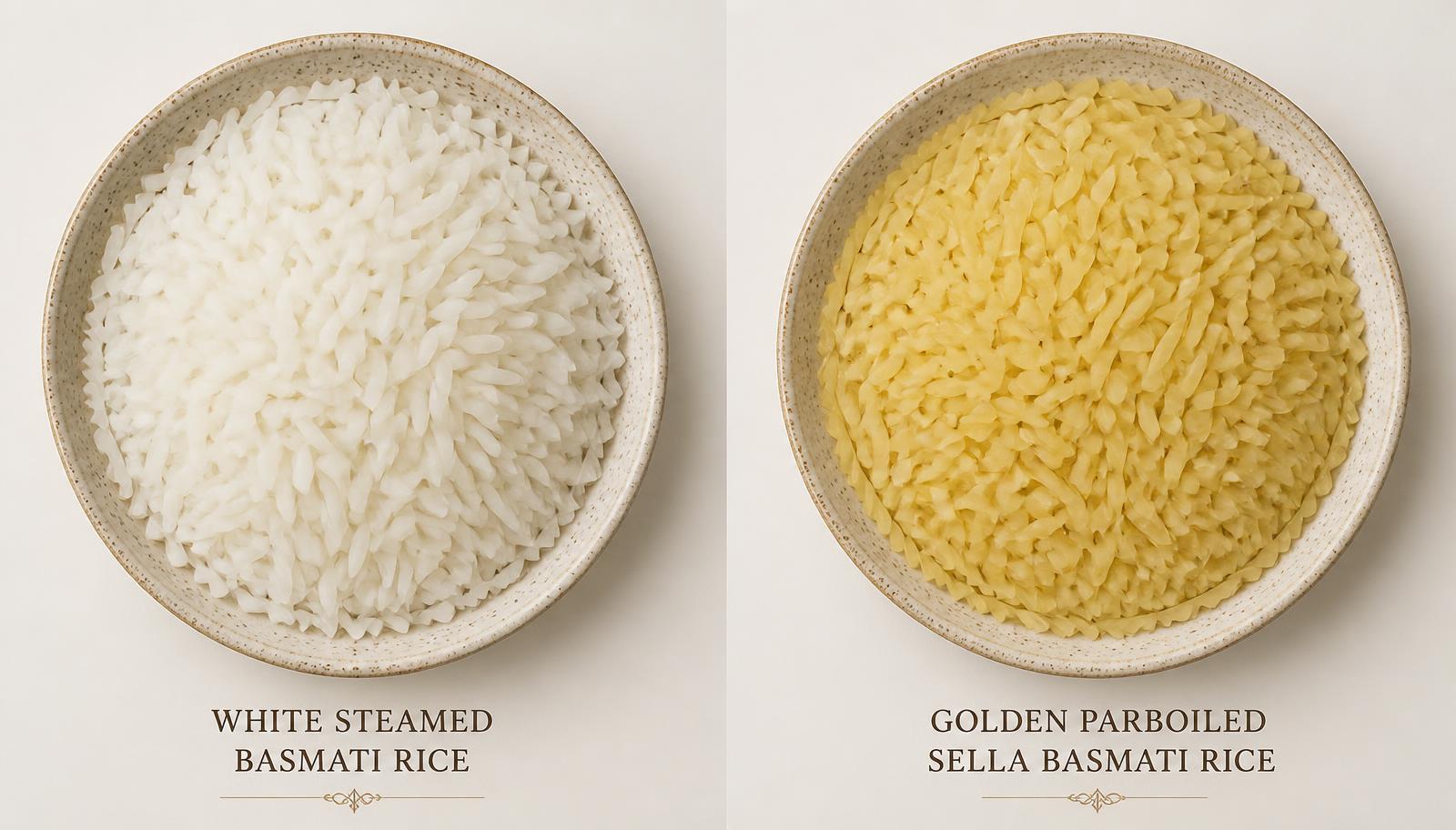

For business buyers, the right choice depends on the desired appearance, aroma, cooking performance, processing type, target application and overall commercial positioning.
1121 Basmati is widely recognized for its distinctive long-grain characteristics, but other varieties can also provide strong performance depending on the intended use.
What Makes 1121 Basmati Different?
1121 is known in the trade for its particularly long slender kernels and characteristic Basmati aroma.
Its physical characteristics can make it attractive for premium presentation, especially where elongated cooked grains are important.
However, the variety name alone does not guarantee identical performance from every supplier. Processing, quality selection, storage and handling also influence the final product.
How Does 1121 Compare With 1509?
1121 and 1509 are both important Basmati varieties, but they can differ in grain characteristics, market positioning and cooking behaviour.
1121 is generally associated with especially long kernels.
1509 is also a long-grain Basmati variety and may be selected by buyers looking for a balance between Basmati characteristics and commercial value.
The practical choice depends on the specific specification rather than the variety name alone.
Other Basmati Varieties
Buyers may also encounter varieties such as Basmati 370 and other established Basmati lines.
Each variety can have its own physical and sensory characteristics.
This is why buyers should ask suppliers for a technical product specification rather than assuming that all Basmati varieties perform identically.
Aroma and Cooking Characteristics
Basmati is valued for aroma and distinctive cooking characteristics.
A buyer may evaluate:
- Aroma before cooking
- Aroma after cooking
- Grain elongation
- Grain separation
- Texture
- Appearance
- Cooking consistency
Storage and processing can influence these characteristics, so controlled comparison is more useful than relying solely on the variety name.
Choosing a Variety for Different Applications
Different commercial applications may require different rice characteristics.
For premium presentation, buyers may prioritize long slender grains and strong visual appeal.
For food-service applications, cooking consistency and yield may become especially important.
For retail products, packaging, appearance, consumer expectations and price positioning may play a larger role.
There is therefore no single variety that is automatically best for every buyer.
Pricing and Commercial Positioning
Rice variety influences commercial positioning, but it is not the only factor.
Price can also reflect:
- Processing
- Grade
- Quality selection
- Packaging
- Order quantity
- Inspection requirements
- Market conditions
- Shipment terms
Buyers should compare equivalent specifications before deciding that one variety is simply "more expensive" or "better."
Should Buyers Mix Varieties?
Blending different varieties is a separate commercial decision and should never be assumed to be acceptable.
If a buyer requires a single-variety product, that requirement should be explicitly stated.
Where blending is permitted, the composition and quality specification should be clearly defined before production.
This protects consistency and prevents a product from being unintentionally different from the agreed sample.
How to Compare Suppliers Offering 1121
Ask each supplier for the same information:
- Variety confirmation
- Processing type
- Grain specification
- Broken percentage
- Moisture requirement
- Quality test information
- Sample
- Packaging details
- Shipment quantity
- Relevant documentation
Comparing the same specification across suppliers creates a much more meaningful result than comparing product names alone.