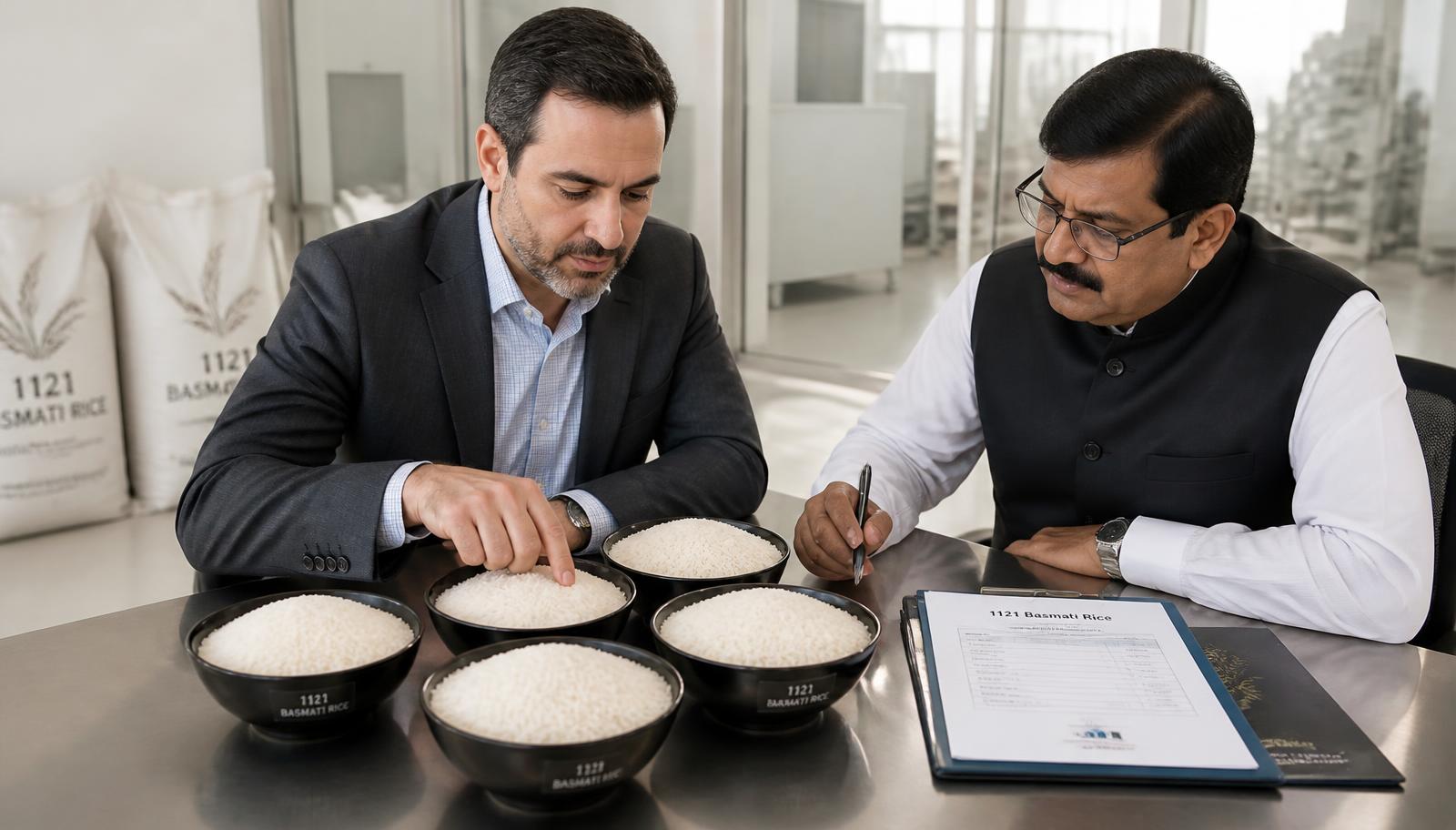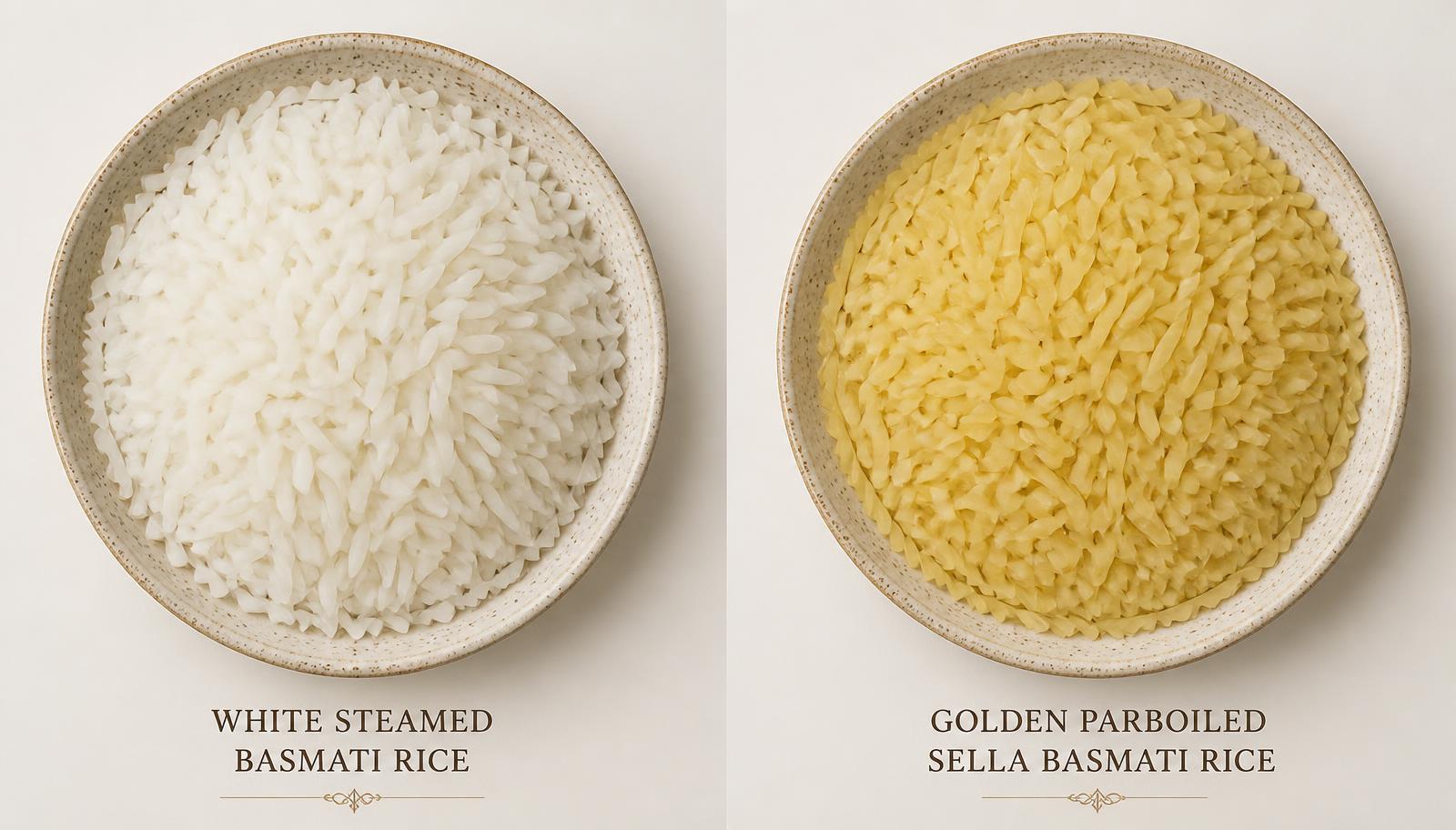
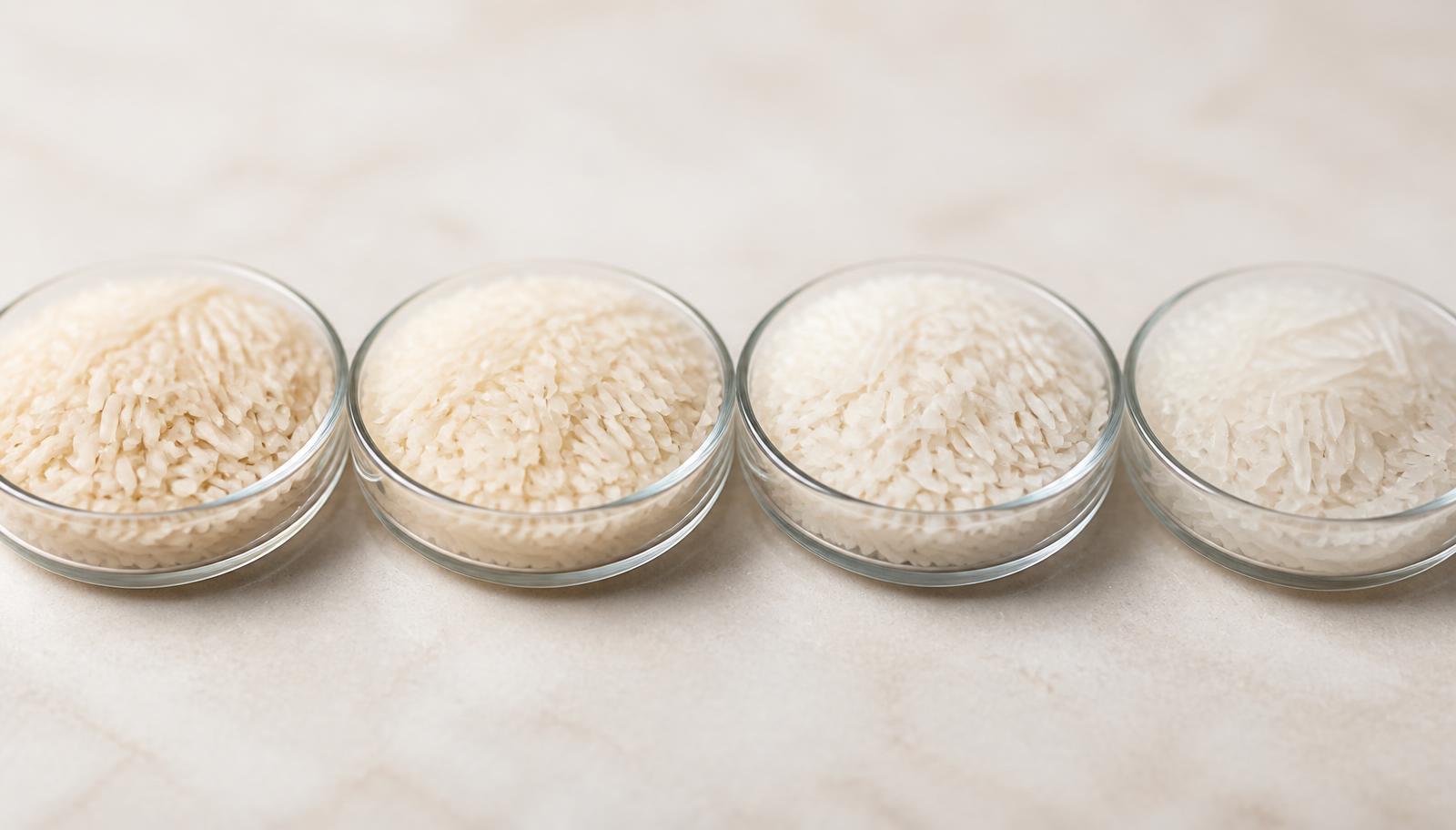
The challenge is that these terms do not all describe the same thing.
Some identify varieties, some describe processing methods and others describe measurable quality characteristics. Understanding the difference helps buyers compare products accurately and select rice that matches their commercial and cooking requirements.
What Does Rice Grade Mean?
A rice grade is generally understood through a set of measurable or commercially agreed characteristics rather than through one word alone.
For a B2B buyer, important characteristics can include:
- Variety
- Grain size and shape
- Whole versus broken kernels
- Uniformity
- Moisture
- Appearance
- Purity
- Processing type
- Cooking performance
This means two products may both be described as Basmati while having different specifications and commercial positioning.
Grain Length and Uniformity
Grain length is one of the most visible characteristics of long-grain rice.
However, length should not be considered in isolation.
Uniformity is also important. A shipment containing grains with relatively consistent physical characteristics can produce a more predictable appearance and cooking result than a highly mixed lot.
Codex uses dimensional criteria to classify rice grain types, but commercial Basmati specifications can contain additional requirements. Buyers should therefore use the exact contractual specification when evaluating a shipment.
What Are 1121 and 1509?
Numbers such as 1121 and 1509 refer to recognized rice varieties or breeding lines used in Basmati trade.
These names are useful for identifying the underlying product, but the name alone does not establish every quality characteristic of a finished shipment.
The final product can still differ according to processing, grading, storage, handling and the specification agreed between buyer and supplier.
For this reason, buyers should avoid treating the variety name as a complete quality specification.
Whole Kernels and Broken Kernels
Broken percentage is another important quality parameter.
A broken kernel is a grain fragment that falls below the applicable whole-kernel size definition.
The acceptable percentage depends on the product grade and commercial specification.
This is why buyers should not rely on broad statements such as "low broken rice." The actual tolerance should be stated clearly in the purchase specification.
Broken rice is not automatically poor quality. It becomes a concern when the percentage differs materially from the specification the buyer expected.
Chalkiness and Appearance
Appearance affects how rice is perceived by consumers, retailers and food businesses.
Depending on the variety and processing method, buyers may assess:
- Kernel colour
- Uniformity
- Chalkiness
- Surface appearance
- Broken grains
- Foreign material
- Overall cleanliness
However, visual assessment should complement, not replace, objective quality checks where measurable specifications apply.
Price and Grade Are Connected — But Not Identical
Higher-priced rice may reflect desirable grain characteristics, processing requirements, market positioning, packaging or other commercial factors.
But a higher price by itself does not prove superior quality.
The better approach is to identify which characteristics are driving the commercial value.
For example, one buyer may prioritize appearance and long grains, while another may prioritize a specific variety, processing type or cost-performance balance.
Therefore, the "best" grade depends on the buyer's application.
How to Check the Grade Before Shipment
A clear purchase specification should define the characteristics that matter.
Before shipment, the buyer may use:
- Approved samples
- Supplier quality documentation
- Laboratory test results
- Independent inspection
- Visual checks
- Contractual tolerances
At delivery, the same specification provides the reference point for checking whether the supplied product matches the agreed requirement.
Buyer Checklist
Before approving a Basmati grade, confirm:
- 1What is the exact variety?
- 2What is the processing type?
- 3What grain characteristics are required?
- 4What broken percentage is acceptable?
- 5What moisture requirement applies?
- 6What purity requirements apply?
- 7How will the shipment be tested?
- 8What sample is being used as the reference?
- 9What packaging specification is required?
- 10Which quality parameters are written into the contract?